
One Spark to Get Your Business off to the Right Start
December 17, 2025
The 2026 Executive Guide to Office Furniture: Strategic Procurement for Growth and Identity
December 29, 2025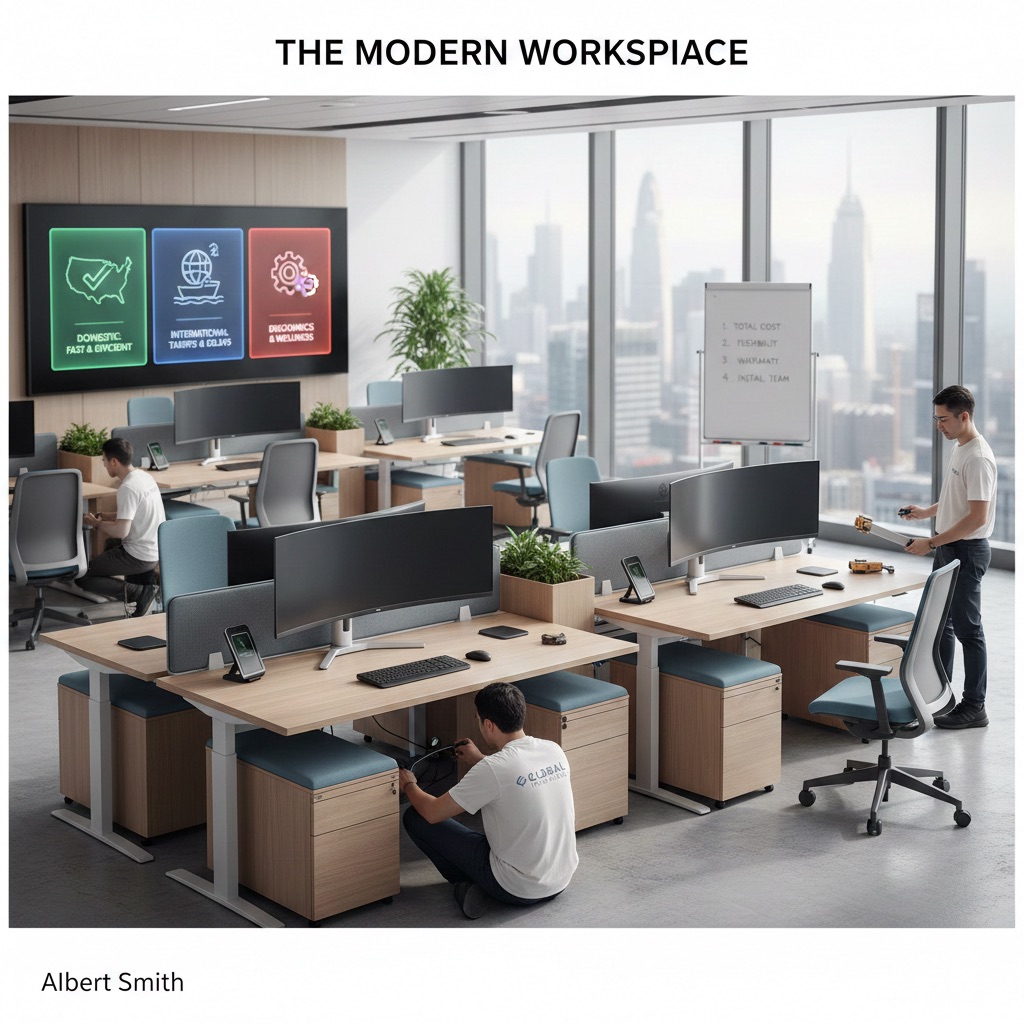
The Modern Workspace
In today’s business landscape, the physical office has evolved from a simple utility into a strategic asset. As companies manage hybrid work, employee wellness, and supply chain challenges, furniture procurement has become a critical financial and operational decision that directly impacts productivity and long-term costs.
I. Domestic vs. International Sourcing: The Cost of Global Logistics
While international sourcing has traditionally offered lower base prices, the total cost of ownership (TCO) is shifting rapidly due to trade policies, tariffs, and logistics realities.
1. The Tariff Landscape
As of late 2024 and into 2025–2026, tariffs on upholstered furniture and cabinetry from key international origins have increased significantly, with some rates reaching 25% to 50%. These changes are reshaping procurement strategies for American businesses.
II. Checklist for Informed Procurement
Before finalizing any furniture purchase, evaluate these key factors:
- Total Cost Analysis: Does the quoted price include shipping, tariffs, duties, and insurance?
- Flexibility & Modularity: Can the furniture be easily reconfigured as your team grows or relocates?
- Warranty & Local Support: Is there reliable local service for repairs (especially on motors and mechanisms)?
- Installation Credentials: Does the installation team have proven experience with the specific brands you’re purchasing?
Final Thoughts
Informed office furniture procurement requires balancing immediate cost with long-term value, health, and reliability. Prioritizing domestic sourcing where practical helps avoid tariff volatility, while professional installation protects your investment and ensures optimal performance.
The right workspace doesn’t just hold equipment — it actively supports the success of your most valuable asset: your people.
References
- Business of Home (2024): What to know about the new furniture and cabinetry tariffs. Link
- Trade Compliance Resource Hub (2024): Tariff Tracker and de minimis exemption updates.
- Herman Miller (2024): Turn Your Open Office into a Productive Office.
- OFDC Commercial Interiors (2025): Five Transformative Trends in Office Space Design.
- Vari (2024): Best Practices and Common Pitfalls of Buying Office Furniture.
- Midwest Installation Group (2025): Signs It’s Time to Upgrade Your Office Furniture.
- All Business Systems (2024): Sustainable Office Furniture: Environmental Responsibility Meets Business Value.
- FurniGenius (2024): Navigating B2B Furniture Logistics and Lead Times.